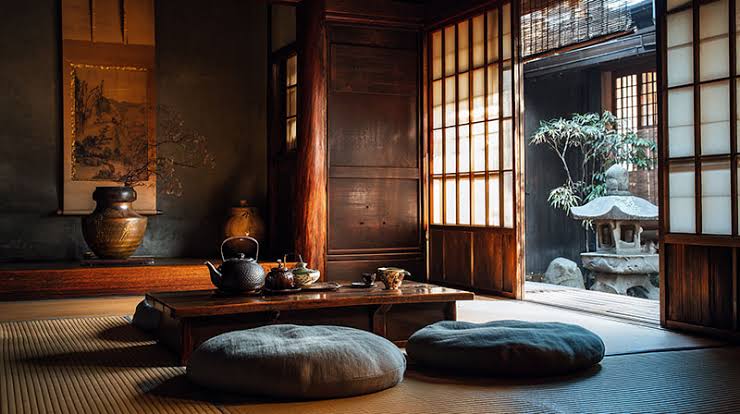
There is a particular kind of hospitality that makes you feel immediately at ease.
Nothing is being performed.
There is no elaborate table trying to impress you. No perfect arrangement that makes you afraid to touch anything. No host constantly asking whether everything is all right.
Instead, there is tea.
A bowl.
A quiet room.
Perhaps a flower.
And the feeling that someone has thought carefully about your presence.
This is one of the things the Japanese tea house can teach us about hosting well.
Not how to entertain.
How to pay attention.
Hospitality Has Become a Performance
We have become very good at preparing for guests.
We save recipes. We buy special glasses. We rearrange the dining table. We search for the perfect tablescape.
We light candles, polish surfaces, choose playlists and photograph the result before anyone arrives.
There is nothing wrong with any of this.
But somewhere along the way, hospitality can become another form of performance.
The house has to look perfect. The food has to be impressive. The host has to appear effortless. And the guest becomes an audience.
The Japanese tea house suggests another possibility.
What if hospitality is not about impressing someone, but about making them feel considered?
That is a much quieter ambition.
And perhaps a more generous one.
The Guest Does Not Need to Be Impressed
The traditional Japanese tea ceremony, or chanoyu, turns the preparation and serving of tea into an expression of hospitality.
The Japanese National Tourism Organization describes the tea ceremony as closely connected with omotenashi — a traditional idea of looking after guests wholeheartedly.
But the interesting part is what this attention actually looks like.
It is not necessarily abundance.
It can be the careful selection of a bowl. The seasonality of a flower. The cleanliness of an object. The arrangement of a room. The temperature of the tea. The way the guest enters. The sequence of small actions.
The guest is not overwhelmed with things.
The guest is given attention.
That distinction changes everything.
A Room Can Welcome Someone Before You Say a Word
A good host does not begin when the door opens.
The hosting has already happened.
It happened when the room was prepared. When the chair was placed where the evening light falls. When the table was cleared. When the tea was chosen. When someone noticed that there was nowhere comfortable to put a cup and quietly added a small tray.
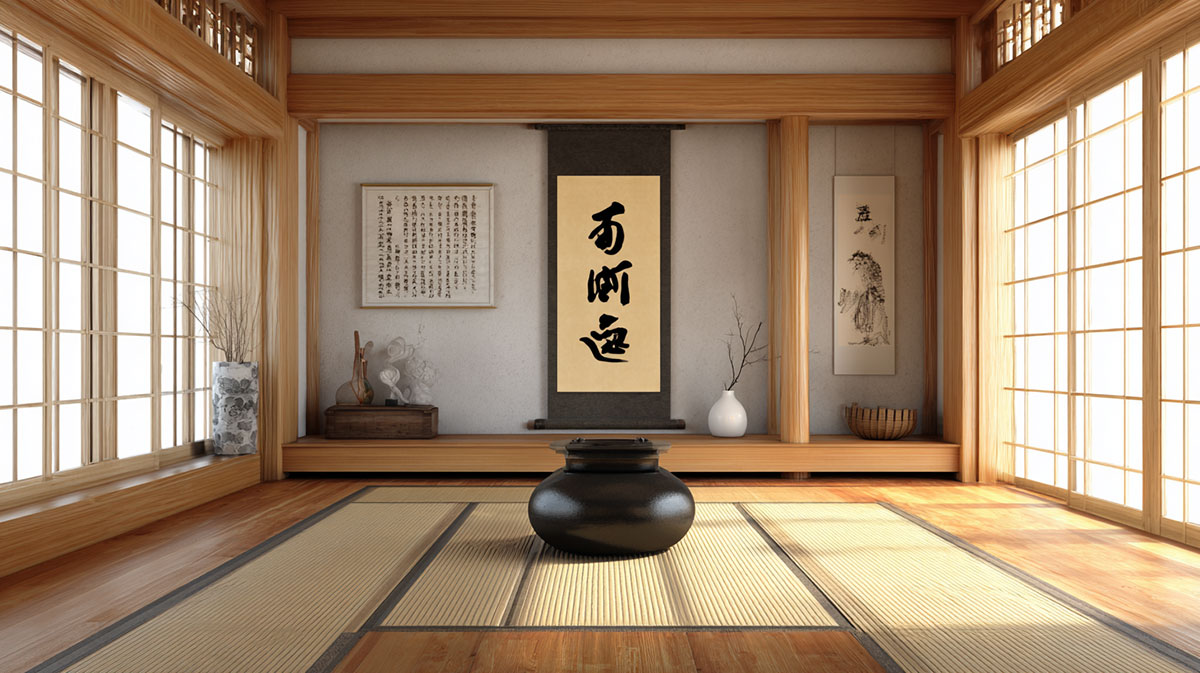
Traditional tea gatherings place considerable importance on the room, its objects and the seasonal elements selected for the occasion. The Japan Tourism Agency notes that tea, sweets, decorations and utensils are chosen carefully according to the season and to enhance the guest's experience.
This is a useful idea far beyond the tea room.
The room does part of the hosting.
A comfortable home does not need to announce itself.
It simply removes small obstacles to comfort.
The Beauty of One Good Thing
There is another lesson hidden inside the tea room.
You do not need twelve beautiful things when one beautiful thing will do.
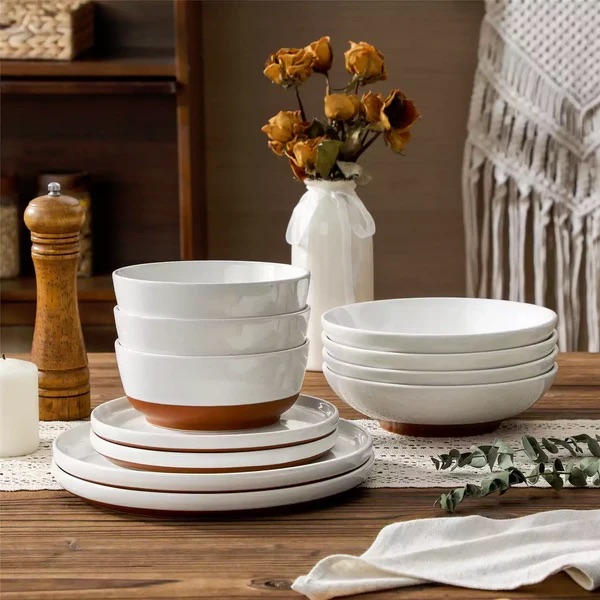
One ceramic bowl. One linen cloth. One branch in a simple vase. One good tray. One pot of tea.
The visual restraint is not emptiness for its own sake.
It allows attention to settle.
This is one reason Japanese interior design and minimalist Japanese homes can feel so different from spaces designed around constant decoration.
There is room for the object to be seen. There is room for the guest to breathe. And there is room for conversation to become the most important thing in the room.
The Quiet Table
You don't need a complete Japanese tea ceremony to bring this feeling home.
A handmade-looking ceramic cup, a simple wooden tray and a linen napkin can be enough to create a small ritual around serving something to someone.
For a quiet Japanese-inspired table:
Japanese tea set / matcha bowl
Wooden serving tray
Linen napkins
Hosting Without Hurry
There is a particular kind of discomfort that happens when the host is constantly moving.
More food. More drinks. More plates. More questions.
Would you like this? Do you need that? Can I get you anything else?
Of course, care matters.
But sometimes excessive care becomes another kind of pressure.
The guest starts feeling responsible for the host's effort.
The tea house offers a different rhythm.
The preparation is deliberate. The movements are calm. The guest is allowed to receive. And the host is allowed to be present.
Perhaps the best hospitality is the kind that does not make the guest feel indebted to it.
Silence Is Not an Empty Conversation
We often treat silence as something that needs to be filled.
Music. Television. Conversation. Notifications. Another question. Another story.
But silence can be a form of generosity.
It gives people somewhere to put their attention.
In Japanese tea culture, the relationship between host, guest, season, objects and atmosphere is part of the experience. The Embassy of Japan describes harmony and respect between host and guest, as well as careful attention to the utensils and seasonal setting, as important principles of the Way of Tea.
This is not about recreating a formal tea ceremony in your living room.
It is about noticing what happens when you stop trying to fill every space.
Try it next time someone comes over.
Make tea. Put the phone away. Sit down. Let the first few minutes be quiet.
You may be surprised by how quickly the room becomes comfortable.
The Host Should Be Able to Sit Down Too
There is something else worth questioning.
Why do we assume that being a good host means being constantly busy?
The host disappears into the kitchen. The host clears plates. The host refills glasses. The host checks the oven. The host apologizes for the food.
Eventually, everyone is enjoying the evening except the person who created it.
That is not the kind of hospitality we are interested in.
A home gathering should contain the host too.
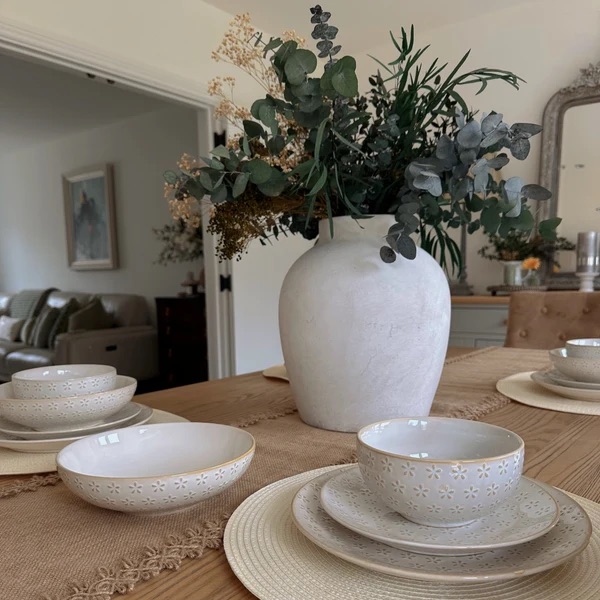
The host should be able to sit down. Drink the tea. Listen to the conversation. Notice the evening light. Become part of the moment.
Hosting is not a service industry.
It is an invitation to share time.
A Table Made for Staying
The most useful hosting objects are rarely the spectacular ones.
They are the objects that quietly make staying easier.
A tray that lets you carry everything at once. A ceramic cup that feels good in the hand. A linen napkin that softens the table. A small serving bowl. A teapot that can remain on the table.
If you are building a Japanese-inspired table setting, these are the pieces I would look for:
Japanese ceramic cups & tea bowls
Minimalist wooden trays
Linen table textiles
The Table Is Not the Event
This may be the most important distinction.
A beautiful table is not hospitality.
It is only the setting.
You can have an extraordinary tablescape and make someone feel uncomfortable.
You can serve a very simple meal and make someone feel completely at home.
You can have mismatched cups and a scratched wooden table and create an evening people remember for years.
The objects matter.
But they are not the point.
The point is what they allow people to do.
Stay. Talk. Rest. Eat. Listen. Be quiet.
Hospitality Without Excess
There is a strange irony in modern hosting.
We often buy more things in order to create an atmosphere of simplicity.
More plates. More glasses. More candles. More decorations. More seasonal tableware. More things specifically for guests.
But perhaps the better question is:
What do I already have that can help someone feel comfortable here?
That question changes the way we shop.
A wooden tray does not need to be a "hosting essential." It can simply be a tray you use every day.
A ceramic bowl does not need to wait for guests. It can hold breakfast tomorrow morning.
A linen napkin does not need to belong to a special occasion. It can become part of Tuesday.
This is where hospitality and intentional living meet.
The things we buy become better when they have more than one reason to exist.
What the Tea House Teaches Us
The Japanese tea ceremony has a formal vocabulary, precise procedures and traditions that cannot simply be reduced to interior styling.
But one principle travels beautifully into everyday life:
attention is hospitality.
The Japan Tourism Agency describes the principles of harmony, respect, purity and tranquility as being expressed through the preparation of tea.
These ideas are surprisingly practical.
Harmony can mean a room where nothing competes for attention.
Respect can mean preparing something carefully because another person will receive it.
Purity can mean simplicity and cleanliness.
Tranquility can mean refusing to rush the moment.
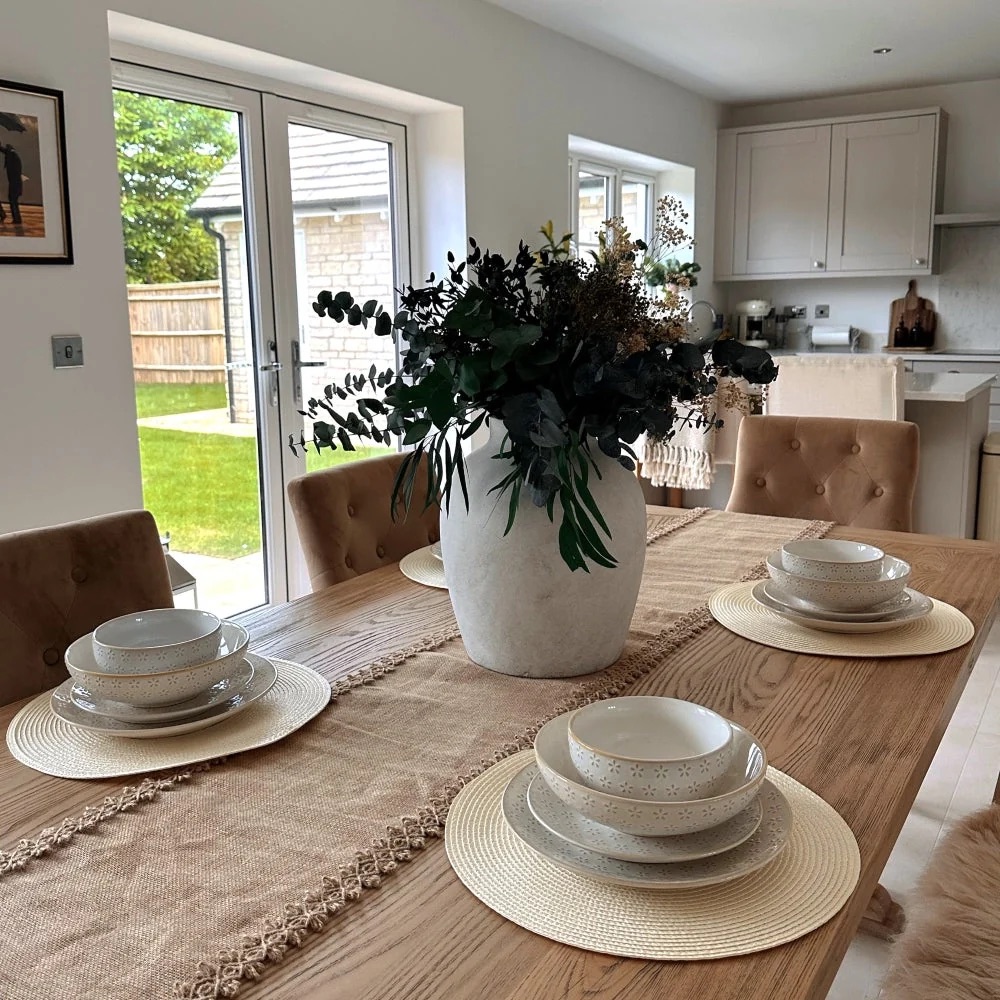
None of these require a tatami room.
They require attention.
The Luxury of Preparing Something Carefully
We tend to associate luxury with more.
A more expensive table. A better bottle. A larger meal. A more elaborate home.
But the tea house suggests another definition.
Luxury can be care made visible.
A cup selected because you know someone likes its shape. Tea prepared before the guest asks. A chair moved closer to the warmth. A window opened because the evening is beautiful. The room cleared so conversation has somewhere to happen.
These are small things.
But small things are often where attention becomes tangible.
Create a Tea Ritual for Guests
You do not need to recreate a Japanese tea ceremony.
Start smaller. Choose one tea. Choose one beautiful cup. Keep a small tray ready. Add a linen napkin. And make the preparation itself part of the evening.
For a simple Japanese tea ritual at home, browse:
Matcha / Japanese tea ceremony sets
One example worth exploring: Goodwei Japanese Matcha Tea Ceremony Se
The Irish Amazon listing currently describes this set as including a ceramic matcha bowl, bamboo whisk, whisk holder, spoon and matcha, making it particularly suitable as a beginner-oriented tea ritual set.
A Different Definition of Welcome
Perhaps we have been thinking about hospitality backwards.
We ask: What should I buy before people come over?
Maybe we should ask: What can I remove so they can relax?
Remove the clutter. Remove the pressure. Remove the expectation that everything has to be perfect. Remove the need to keep entertaining.
Then notice what remains.
A table. Tea. Conversation. A little silence. Someone you are glad to see.
That may be enough.
The Quietest Part of Hosting
There is a moment after everyone has arrived when the preparation is over.
The food is on the table. The tea has been poured. The door is closed. Nobody needs anything.
For a few seconds, the host can finally stop.
This is perhaps the real test of a home.
Not whether everything looked perfect before the guests arrived.
But whether everyone — including the person hosting — can finally relax.
The Japanese tea house understands something that modern entertaining sometimes forgets:
the purpose of preparation is not preparation itself.
It is presence.
Hosting as an Act of Attention
The next time someone comes over, try doing less.
Clear one surface. Put away your phone. Choose one good cup. Make tea. Open the window if the evening is beautiful.
Do not apologize for the house. Do not explain every detail. Do not rush to fill every silence.
Sit down. Listen. Let the room do some of the work.
And remember that the most memorable thing you can offer another person is rarely an object.
It is the feeling that, for a little while, their presence mattered enough for you to pay attention.
That is what the tea house teaches about hosting.
Not how to perform hospitality.
How to practice it.
A Small Practice for Your Next Gathering
Before your next guest arrives, ask yourself three questions:
What can I remove?
What can I prepare slowly?
What can I leave unfinished?
Then make the tea. Let the conversation begin. And leave a little room for silence.
A Final Thought From Nomadisch
A home does not need to be impressive to be welcoming.
It needs to make room.
For a cup. For a conversation. For another person. For silence. For the evening to take its time.
Perhaps that is the quietest form of luxury.
You May Also Like
The Art of Nothing on the Table →
Growing Old Without Pretending Otherwise →
On Choosing Fewer, Better Things →
This article contains affiliate links. See our Affiliate Disclosure for details.