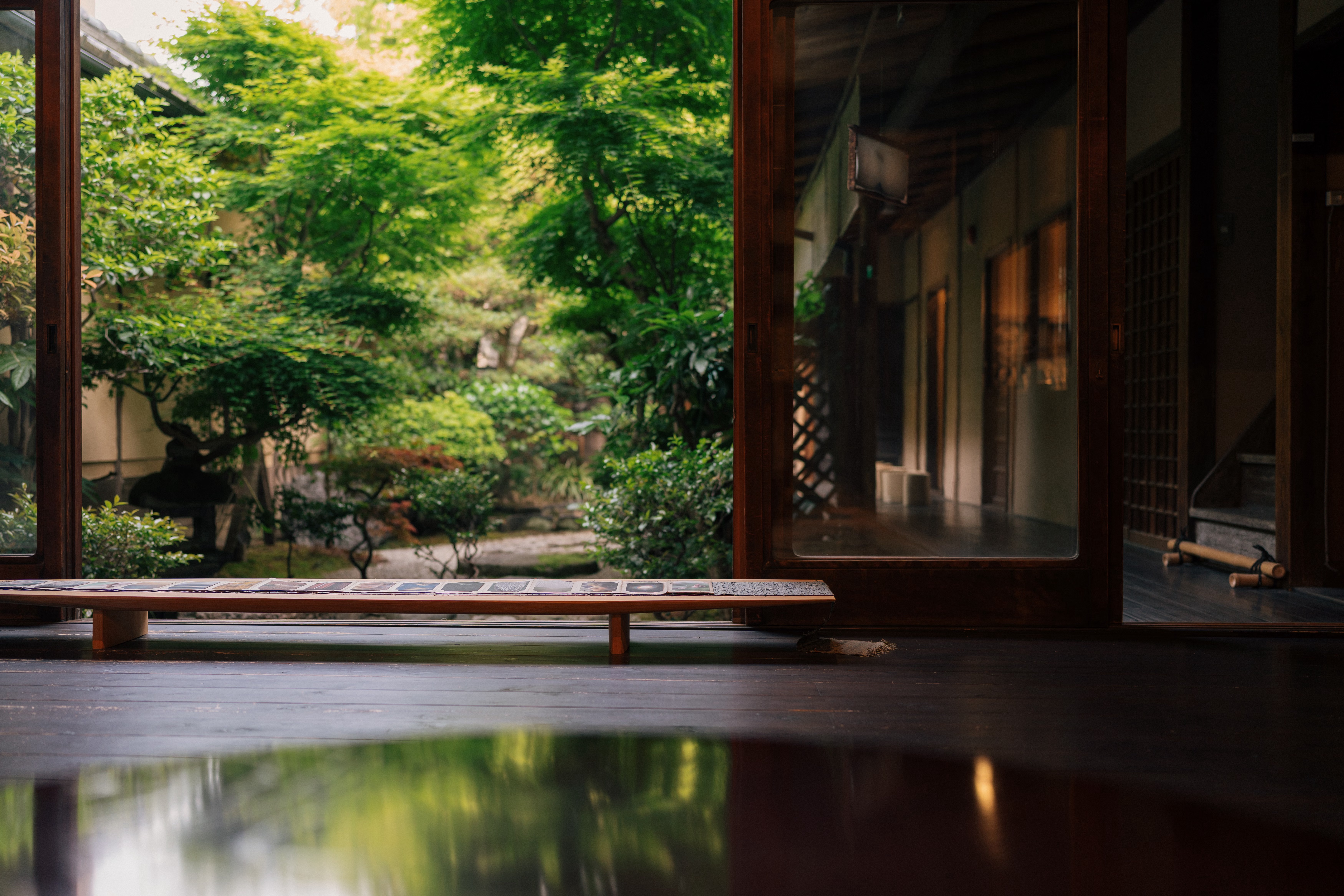
There is a particular moment after breakfast when a table becomes almost invisible.
The cup has been returned to the kitchen. The plate is gone. A book has been closed. What remains is a wooden surface catching the morning light, completely free of obligation.
Nothing is happening there.
And yet, for a moment, the room feels better.
We are accustomed to thinking of empty space as something waiting to be filled. A blank wall needs art. A shelf needs objects. A dining table needs flowers, books, candles, perhaps a bowl placed carefully in the centre.
The instinct is understandable. We decorate because we want our surroundings to express something about us.
But Japanese minimalism proposes a quieter question:
What if the empty space is already doing something?
This is where the Japanese concept of ma becomes interesting.
Often translated as "space," "interval," or "emptiness," ma is not simply the absence of an object. It is the meaningful space between things — the pause that allows everything around it to be perceived more clearly.
In architecture, music, gardens, painting, and Japanese interior design, emptiness can have as much presence as what occupies the room.
A bare table is therefore not necessarily an unfinished table.
It may be a deliberate one.
The Western Habit of Filling Space
Modern interiors often operate according to a simple visual equation: more space = more opportunity to decorate.
A new home creates a shopping list. An empty shelf becomes a problem. A large dining table can feel strangely incomplete until something has been placed at its centre.
This is partly a consequence of consumer culture, but it is also psychological.
Objects provide reassurance. They make a room feel inhabited. They tell us that we have arrived somewhere, that we belong here.
The difficulty begins when every available surface becomes another opportunity for acquisition.
A vase becomes two vases. Two become a collection. A collection requires a shelf. The shelf requires styling. Soon, the room that was supposed to feel calm has become visually busy.
Minimalism is often presented as the solution: remove everything.
But Japanese minimalism is more subtle than simple reduction.
The goal is not emptiness for its own sake.
It is clarity.
The question is not How little can I own?
It is: What deserves to remain visible?
Ma: The Space Between Things
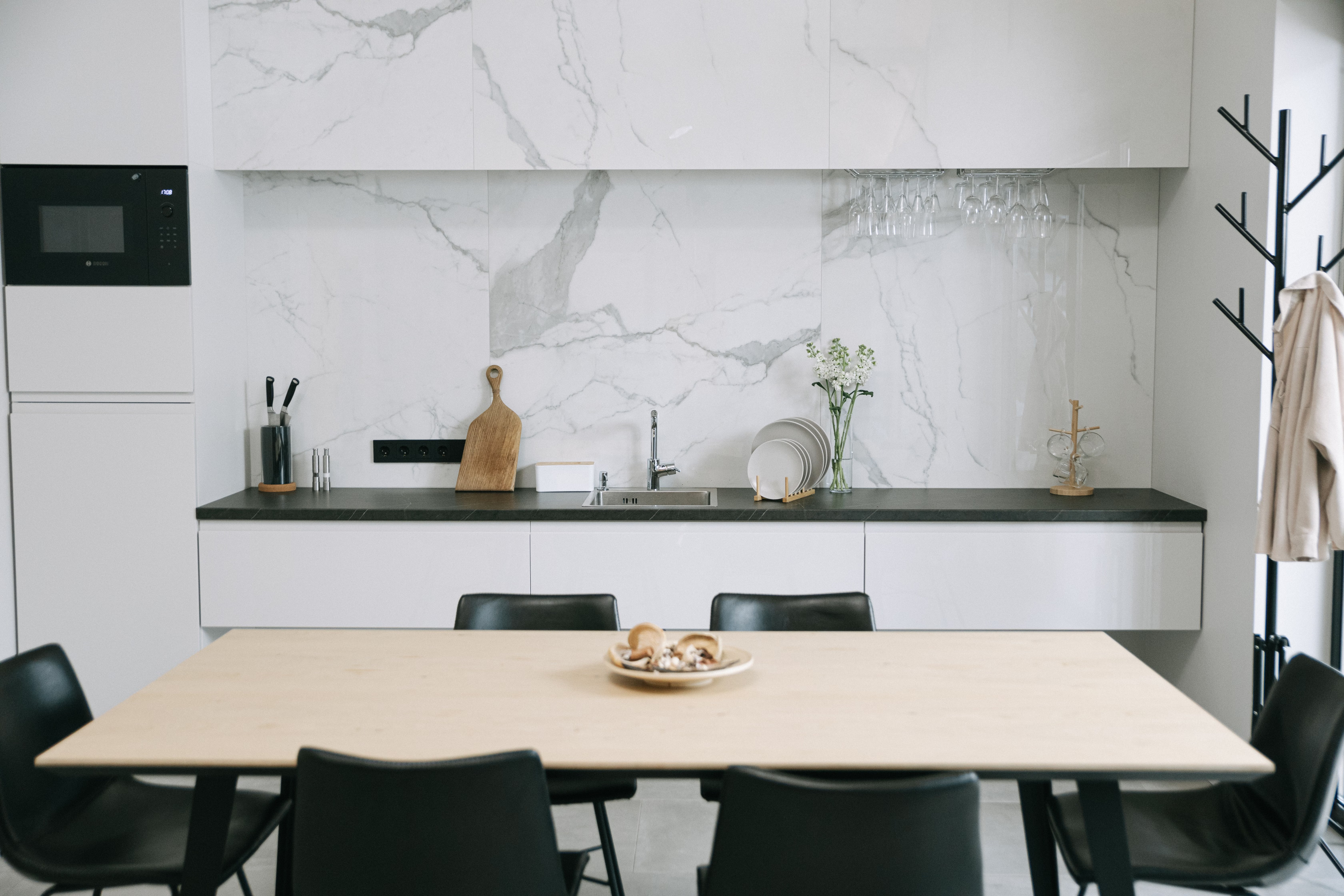
The Japanese idea of ma is difficult to translate precisely because it describes something we tend to treat as nothing.
Consider a pause in music.
The pause is not the absence of music in the ordinary sense. It changes the music around it. It creates anticipation. It gives the previous note somewhere to disappear and the next one somewhere to arrive.
Space can work in the same way.
A single ceramic bowl on a large table has a different presence from the same bowl surrounded by ten decorative objects.
The bowl has not changed.
The space around it has.
This is one reason Japanese interior design can feel unusually calm without necessarily being completely empty.
There may be very few objects, but those objects are allowed to breathe.
The empty space becomes part of the composition.
This principle appears across traditional Japanese aesthetics: in the asymmetry of an arrangement, the pause within a tea ceremony, the open area of a tokonoma, or the carefully framed view of a garden.
What is not there is not necessarily forgotten.
Sometimes it is deliberately protected.
An Empty Table Is Not an Unfinished Table
A dining table is particularly revealing because it sits at the centre of domestic life.
It is where food arrives, conversations unfold, work occasionally takes place, children draw, letters are opened, and someone inevitably leaves their keys.
Its purpose changes throughout the day.
Perhaps this is why a permanently decorated table can feel slightly strange.
It has been assigned a single identity.
The table is always expected to look like something.
But what if its most beautiful state is the one in which it is ready for whatever happens next?
An empty dining table possesses a kind of potential.
It can become a place for dinner in the evening, a desk in the afternoon, a surface for arranging flowers in spring, or simply a quiet visual field in the morning.
Its emptiness keeps its possibilities open.
This is very different from a room that has been stripped of personality.
The distinction is important.
Minimalism is not the absence of personality. It is the removal of visual competition.
The Beauty of a Surface Between Uses
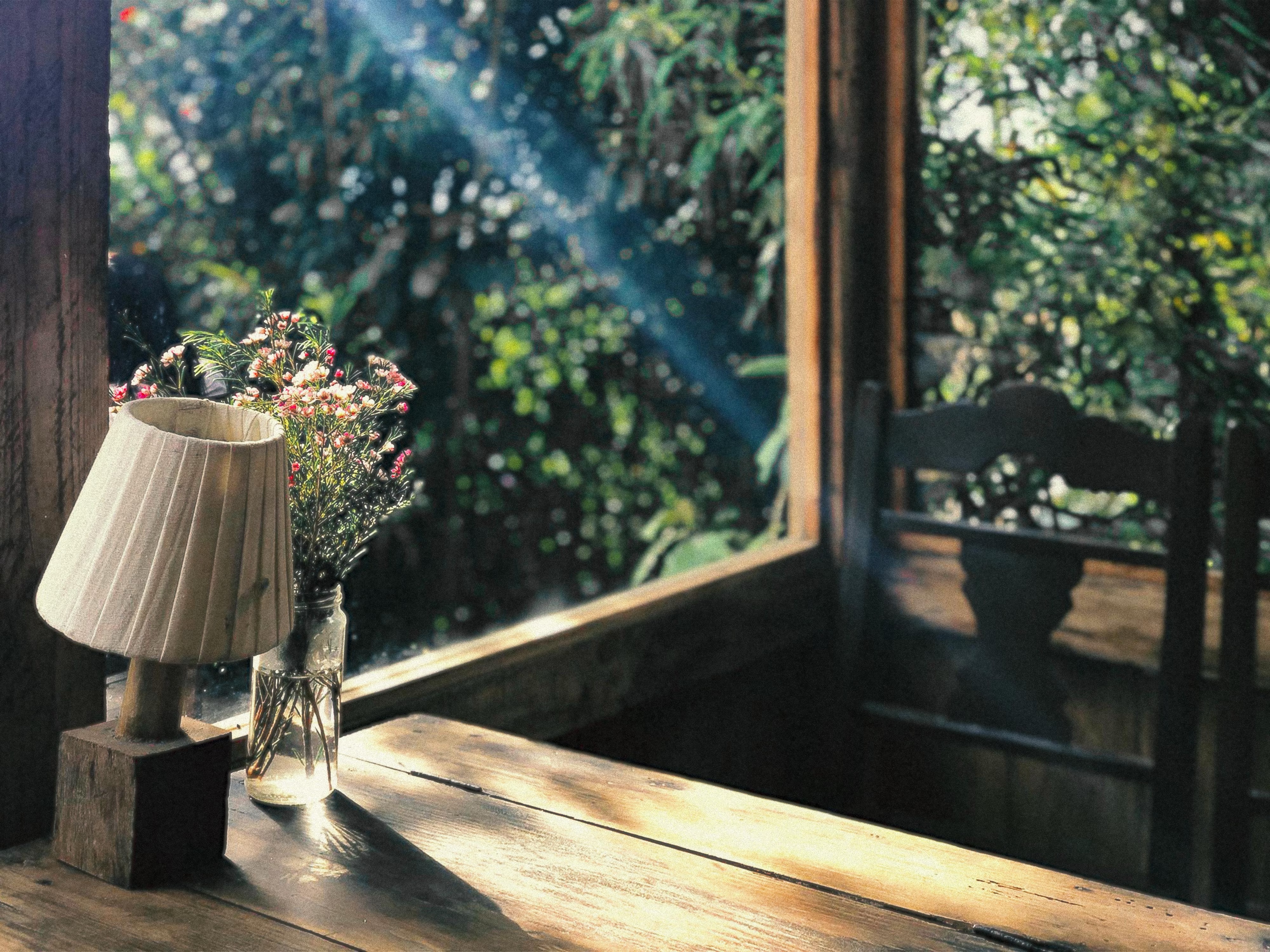
There is something particularly beautiful about objects when they are allowed to disappear from the scene.
A dining table after dinner.
A kitchen counter before breakfast.
A desk after the last page has been written.
A bed before anyone has disturbed it.
These moments reveal something that styled photographs often conceal: a home is not a photograph.
It is a living environment.
Things move. Objects are used. Surfaces become dirty and are cleaned again. Flowers wilt. Wood acquires marks. Ceramics develop small imperfections.
The Japanese aesthetic of wabi-sabi offers another way of understanding this reality.
Beauty does not necessarily depend upon newness, perfection, or permanence. There can be beauty in wear, irregularity, simplicity, and the passage of time.
An empty table participates in the same philosophy.
It does not need to perform.
The Table as a Practice of Intentional Living
There is another reason the empty table matters.
It asks us to reconsider the relationship between ownership and use.
We often buy things because we imagine the person we will become when we own them.
The beautiful ceramic vase suggests a certain kind of home.
The carefully designed coffee table suggests a certain kind of life.
The candle suggests an evening that will finally be slow.
But objects cannot create the life they represent.
At most, they can support it.
This distinction is central to intentional living.
A home becomes more meaningful not because every surface communicates taste, but because the objects that remain have a genuine relationship with the way we live.
A table does not need to demonstrate that we appreciate Japanese design.
Objects Worth Keeping
A small selection of Japanese-inspired objects chosen for everyday use — not decoration for decoration's sake.
Explore the Selection →It needs to hold dinner.
It needs to make room for conversation.
It needs to withstand years of use.
And sometimes, it needs to simply be empty.
Why Empty Space Feels Calm
Every visible object makes a small demand on attention.
A stack of magazines suggests unfinished reading. A decorative object may invite evaluation. A pile of mail announces a task. A crowded shelf creates dozens of visual relationships that the eye has to process.
None of these demands is necessarily dramatic.
Together, however, they create visual noise.
This is why a minimalist home can feel restful even before we consciously understand why.
There is simply less asking to be noticed.
An intentionally empty surface creates a visual pause.
The eye can settle.
The room becomes quieter.
And quiet, in an age of constant notification, has become a form of luxury.
A Different Kind of Luxury
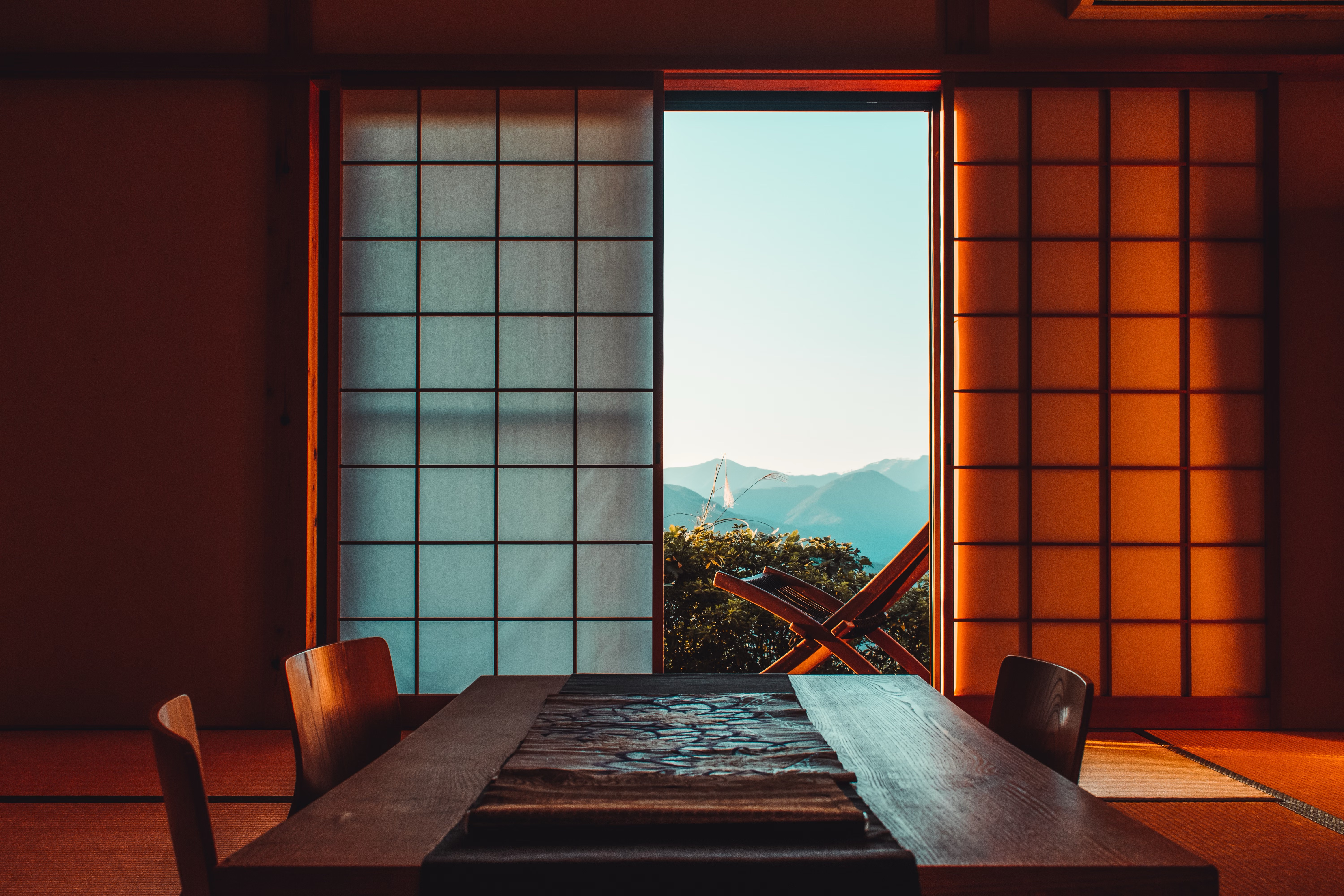
Luxury is often associated with abundance.
More space. More materials. More objects. More choice.
But there is another kind of luxury: having enough confidence not to fill every available space.
This is where Japanese minimalism and contemporary Japandi interiors can meet.
The room does not have to be empty.
It simply needs hierarchy.
One object can become important because everything around it is quiet.
A handmade bowl. A branch. A beautiful lamp. A wooden surface. A pool of light.
The restraint allows materials, texture and craftsmanship to become visible.
Light, Without the Noise
Explore considered lighting for quiet, intentional interiors.
Discover the Collection →The Difference Between Empty and Bare
There is a danger in interpreting Japanese minimalism too literally.
A completely empty room is not automatically peaceful.
A bare table is not automatically beautiful.
Minimalism without attention can become sterile.
What makes ma meaningful is the relationship between emptiness and presence.
A single branch in a ceramic vessel can be more expressive than an elaborate floral arrangement.
A handmade bowl can carry more visual weight than a collection of decorative objects.
A warm pool of light across an empty table can create more atmosphere than an entire room of accessories.
The objective is not to eliminate things.
It is to allow the right things to become visible.
This is perhaps the more mature form of minimalism.
Not less because less is fashionable, but less because attention is finite.
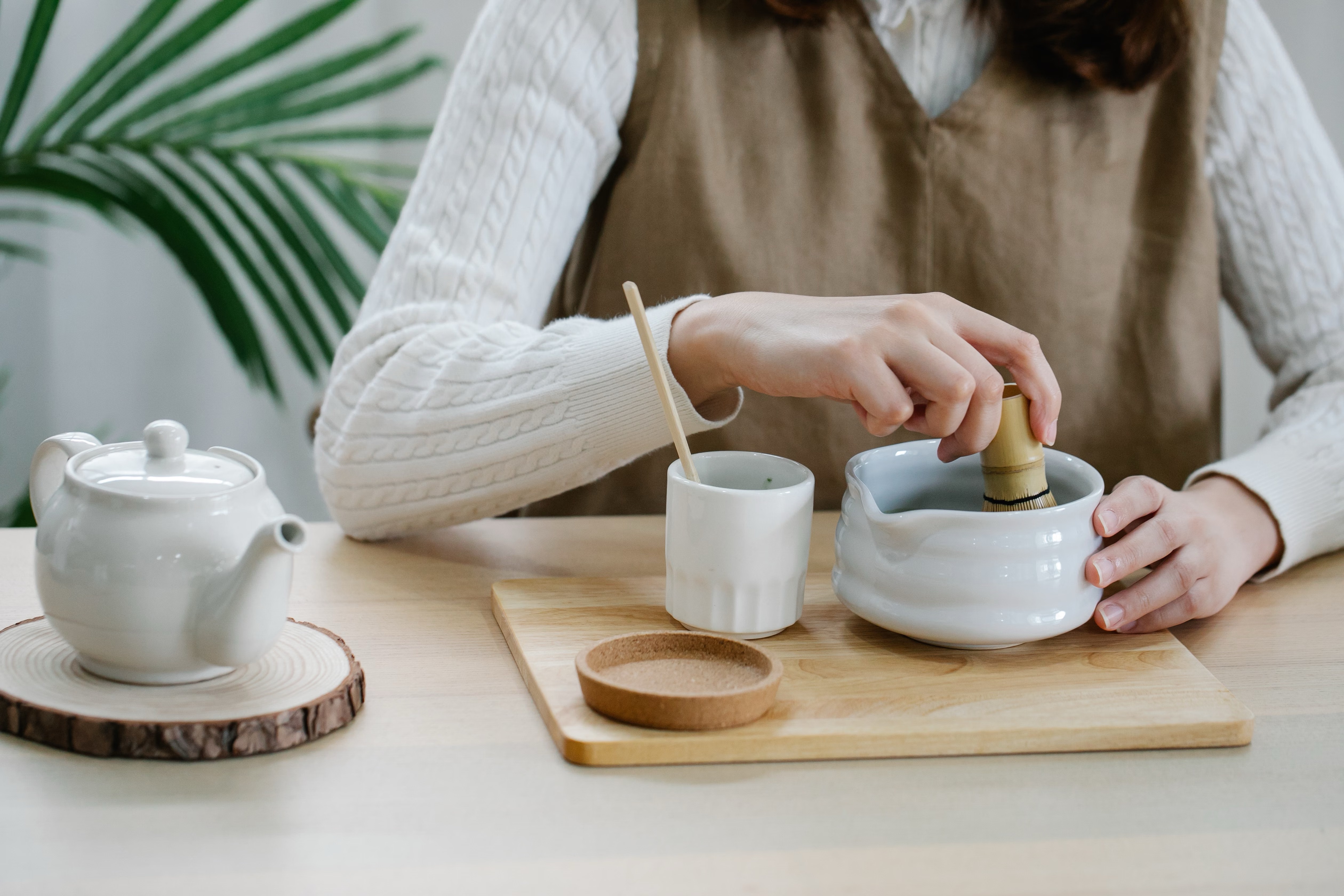
How to Practice Japanese Minimalism at Home
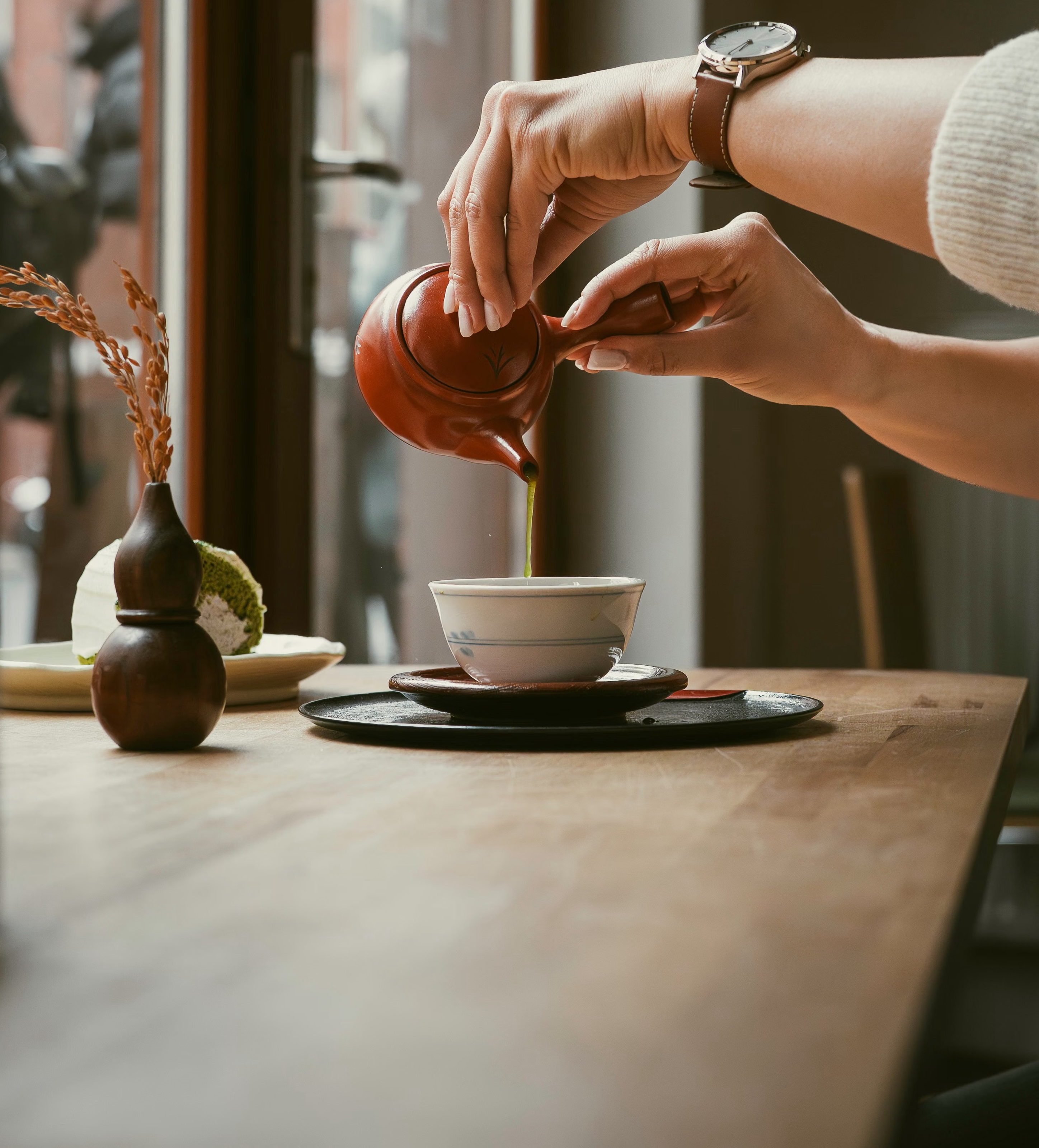
You do not need to redesign your home to introduce more intentional emptiness.
In fact, buying something specifically to make your home look minimalist would rather miss the point.
Start with one surface.
Perhaps the dining table.
Remove everything from it.
Not permanently. Just temporarily.
Look at the surface without immediately deciding what should replace what you removed.
Then ask: What actually needs to live here?
Perhaps the answer is nothing.
Perhaps there is one object you use every day.
A bowl. A small vase. A ceramic cup. A lamp.
Keep that.
Then live with the space for a week.
Notice how often you reach for the objects you removed.
Notice which ones you missed and which ones you never thought about again.
This is more useful than making a dramatic decluttering decision in an afternoon.
It turns minimalism into observation rather than punishment.
The Table as a Daily Ritual
There is another small practice hidden here.
At the end of each day, return the table to neutral.
Not because a perfectly styled home is the goal.
Because tomorrow should begin with a clear surface.
The ritual takes less than a minute.
Remove what does not belong. Return what does. Wipe the surface. Leave it alone.
Over time, the act becomes less about cleaning and more about transition.
One day ends. Another has somewhere to begin.
This is where Japanese minimalism becomes less about interior design and more about how we move through everyday life.
What the Empty Table Gives Back
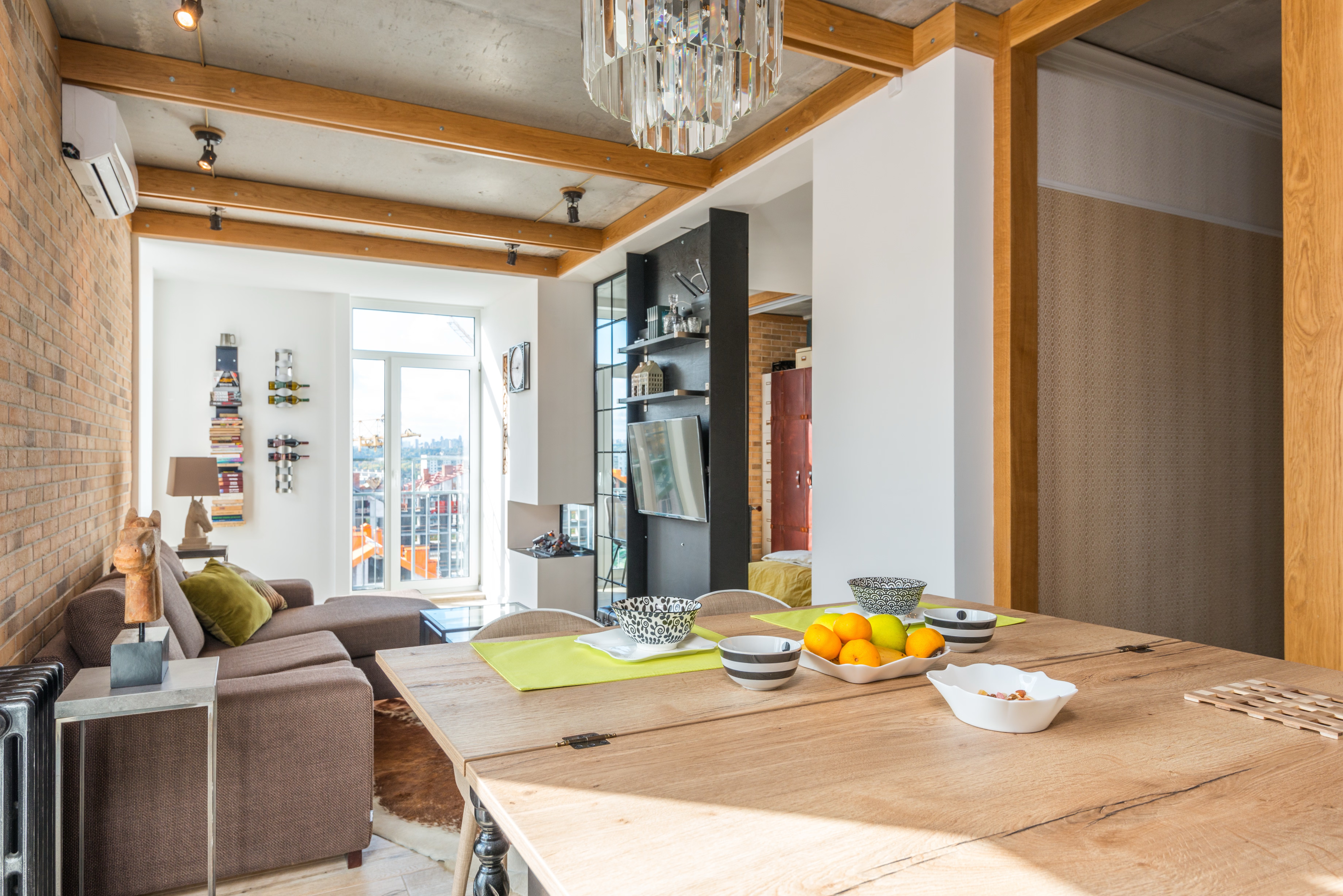
An empty surface gives us something that is increasingly difficult to find elsewhere: room to begin.
It gives the morning somewhere to unfold.
It gives conversation somewhere to gather.
It gives a meal somewhere to happen.
It gives the eye somewhere to rest.
And perhaps, most importantly, it gives us a small reminder that not every space needs to be optimized.
Not every surface needs content.
Not every corner needs decoration.
Not every moment needs to become productive.
There is a particular kind of freedom in allowing something to remain empty.
The table does not have to tell us who we are.
It can simply wait.
The Luxury of Leaving Something Alone
We live in a culture remarkably uncomfortable with emptiness.
We fill calendars. We fill shelves. We fill screens. We fill silence. We fill rooms.
And then we wonder why so little feels quiet.
Perhaps the practice of ma begins with something very small.
A table. One surface. Nothing on it.
Not because we have forgotten to decorate it, and not because we have embraced an extreme version of minimalism.
But because we have finally understood that space itself can be useful.
The empty table is not waiting for us to buy something.
It is waiting for us to notice it.
And perhaps that is what the Japanese art of intentional emptiness has always offered: not a prescription for how little to own, but an invitation to become more conscious of what we allow into our field of attention.
Tomorrow morning, before reaching for another object, look at the table.
Let it remain empty for a while.
There may be nothing there.
That may be precisely the point.