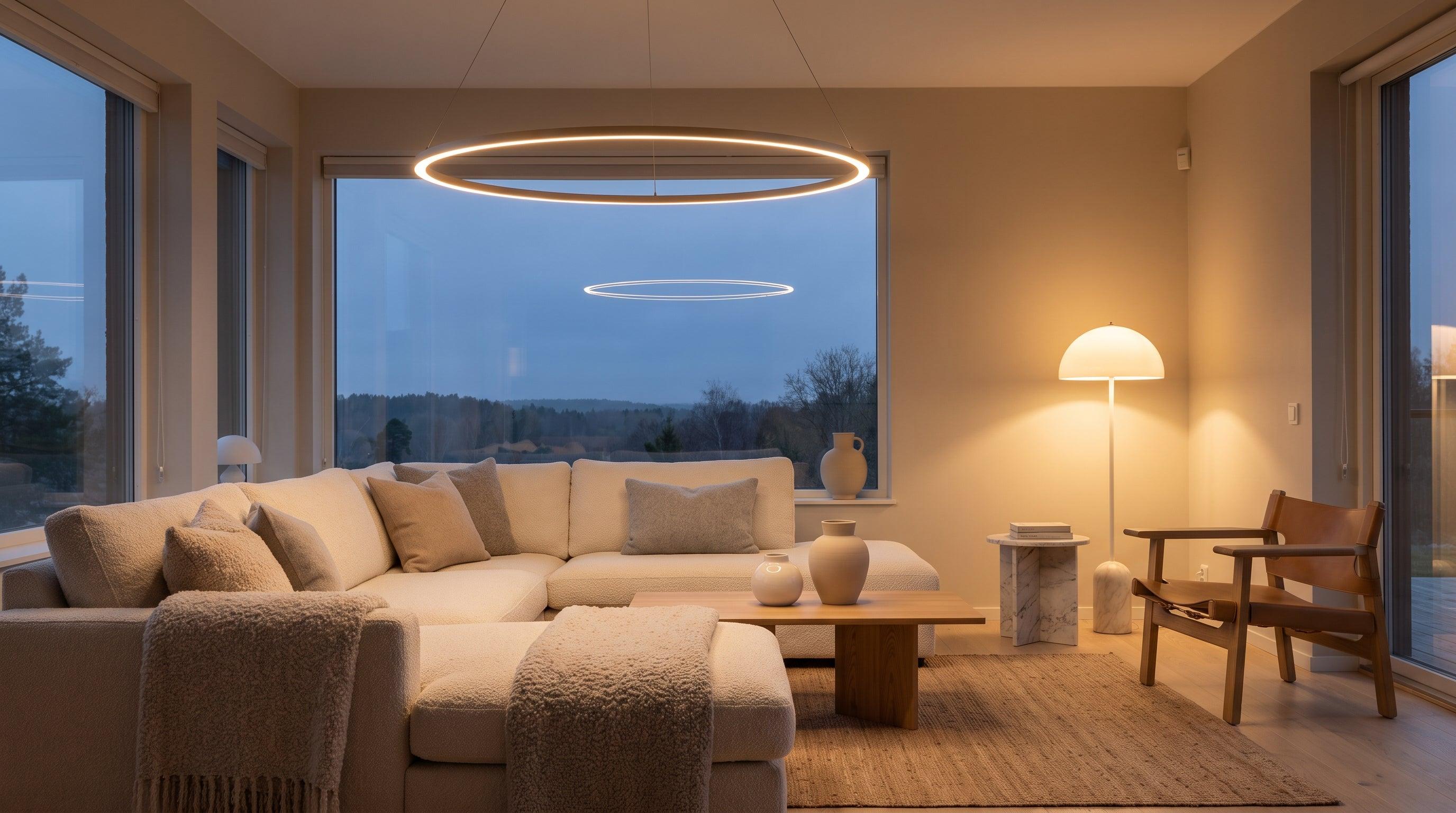
The difference is not always another piece of furniture. Sometimes, it is simply the right lamp.
For homes across Denmark and Europe, where lighting must serve different purposes throughout the day, LED technology offers a practical opportunity to rethink how we use electricity, how we work, and how we experience our surroundings.
OSRAM, operated within the LEDVANCE lighting portfolio, offers a broad range of LED bulbs, decorative lamps, smart lighting, indoor luminaires, kitchen lighting, and other lighting solutions.
But What Makes These Products Worth Considering?
The answer is not simply brightness or brand recognition. It is the combination of energy consumption, light quality, control, design, and suitability for the space in which a lamp is used.
This review examines the technology and the practical value of OSRAM and LEDVANCE lighting, with particular attention to the needs of contemporary European homes.
1. Why LED Lighting Matters More Than We Think
A living room with a single bright ceiling light may technically be well illuminated. However, it can feel flat and overly exposed. The same room, using a combination of ceiling lighting, a floor lamp, and a warmer table lamp, may feel more balanced and adaptable. This is where LED lighting becomes particularly useful.
Compared with traditional incandescent lighting, LED technology generally offers:
- Lower electricity consumption for a comparable amount of light
- Longer operating life
- Greater flexibility in colour temperature
- Dimmable options
- Smart control in compatible product ranges
- Compact designs for different fixtures and applications
The relevant technical measurement is lumens per watt, or lm/W.
Lumens indicate the amount of visible light produced. Watts indicate electrical power consumption. A lamp producing more lumens with fewer watts may be more energy-efficient than another lamp producing the same amount of light with greater electrical consumption.
However, wattage alone does not determine quality.
A technically informed purchase should also consider colour rendering, beam angle, dimming compatibility, lifetime, glare, and the actual requirements of the room.
Nomadisch perspective: Intentional consumption begins by buying the light you actually need — not the brightest lamp available.
OSRAM LED Standard E27 Bulbs
Best suited for: General household lighting.
Why consider them: A practical replacement for conventional bulbs in
compatible fixtures.
Look for: Lumens, wattage, colour temperature, dimmability, and energy
label.
OSRAM LED Standard E27 Bulbs
General household lighting, warm-white options available.
Check Price →2. OSRAM LED Bulbs: A Practical Starting Point
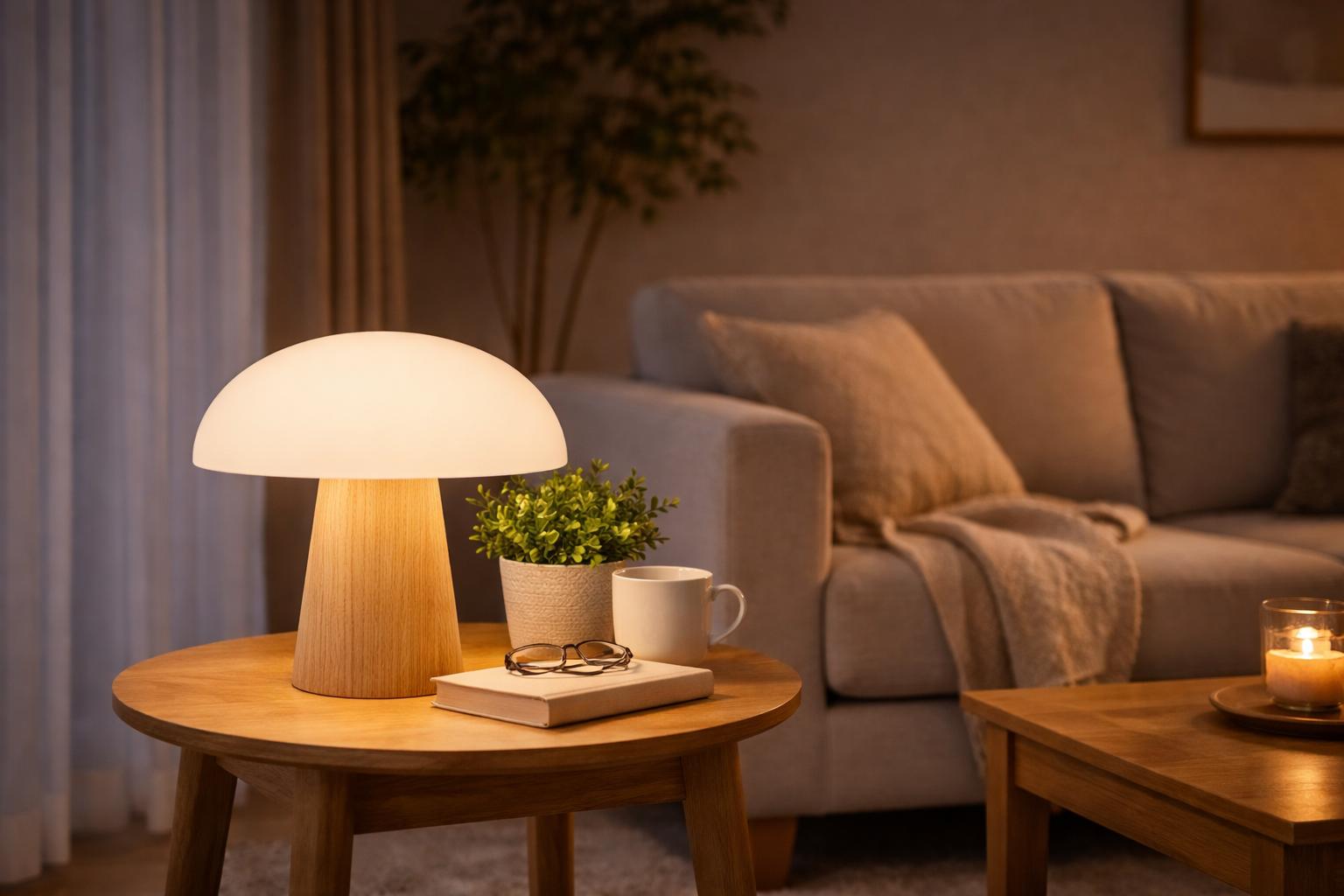
For many households, the simplest lighting upgrade begins with the bulb itself.
OSRAM and LEDVANCE offer LED bulbs in several common formats, including:
- E27: A widely used screw fitting for standard household lamps
- E14: A smaller fitting often found in table lamps, decorative fixtures, and compact luminaires
- GU10: Commonly used in spotlights and directional lighting
- Other specialised fittings for particular fixtures
The advantage of replacing a conventional bulb with a suitable LED model is that the existing lamp may remain in place.
There is no need to redesign the entire room. The change can be small, inexpensive, and immediately practical.
What should buyers examine?
A good LED bulb review should look beyond the brand name. Important specifications include:
| Specification | Why it matters |
|---|---|
| Lumens | Determines how much visible light the bulb produces |
| Wattage | Indicates electrical power consumption |
| Colour temperature | Influences whether light appears warm or cool |
| Colour rendering index (CRI) | Indicates how accurately colours are reproduced |
| Dimmability | Determines whether brightness can be adjusted |
| Lifetime rating | Helps estimate long-term replacement needs |
| Energy label | Helps compare efficiency within the applicable product category |
| Fitting | Ensures the bulb is compatible with the lamp |
For a living room or bedroom, warm white light around 2,700 K is often a comfortable starting point.
For a kitchen or workspace, a different colour temperature may be more appropriate depending on the task, the interior, and personal preference.
There is no single colour temperature that is ideal for every room.
OSRAM LED E14 Bulbs
Best suited for: Bedside lamps, decorative fixtures, and smaller
luminaires.
Why consider them: Suitable for lamps requiring a compact screw fitting.
Look for: Warm-white options, size, brightness, and compatibility with the
fixture.
3. A More Comfortable Living Room Begins with Layered Lighting
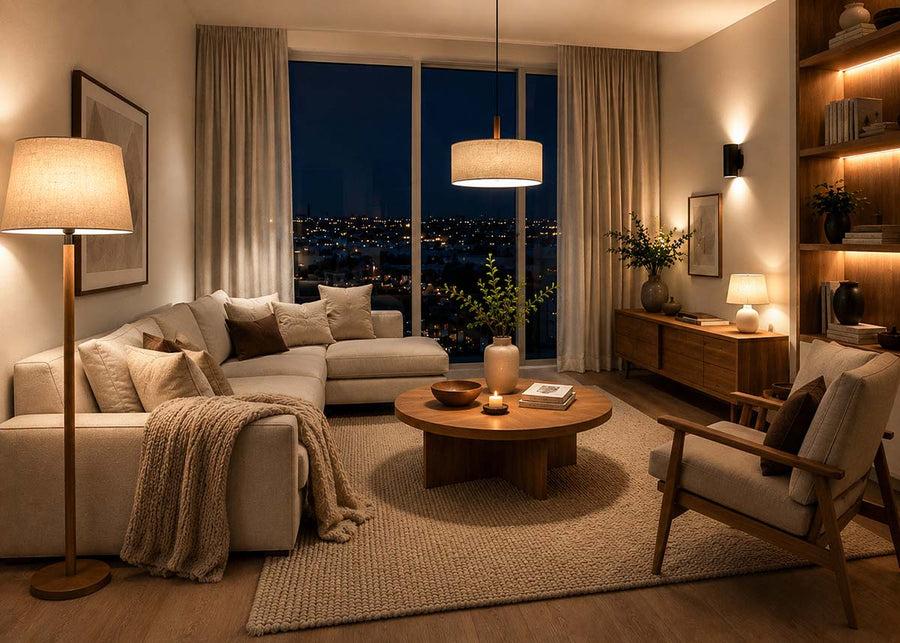
A living room is rarely used for only one activity.
It may be a place for reading, conversation, watching films, receiving guests, or simply resting after a long day.
One fixed light source cannot always serve all these functions well.
A more considered approach is layered lighting. This typically involves three types of illumination:
Ambient lighting
The general illumination of the room. Examples include ceiling lamps, pendant lights, and
broad ceiling luminaires.
Task lighting
Light directed toward a specific activity. Examples include a reading lamp, a desk lamp, or
lighting positioned near a chair.
Accent lighting
Light used to emphasise an object, architectural detail, artwork, or decorative element.
This is particularly relevant to interiors influenced by Japandi and minimalist design,
where a small number of carefully chosen objects may carry considerable visual
importance.
OSRAM and LEDVANCE offer different lamp formats and lighting solutions that can be used in these arrangements. The important point is that the product should serve the room — not the other way around.
Technical consideration: glare
Brightness is not the same as comfort.
A lamp may produce sufficient light while still causing discomfort if the light source is directly visible, poorly diffused, or positioned within the viewer's line of sight. When selecting a lamp, consider:
- Whether the light source is exposed
- Whether the shade diffuses the light
- Whether the lamp creates reflections on screens
- Whether the beam is directed toward the eyes
- Whether brightness can be adjusted
A well-designed lighting arrangement can make a room feel calmer without necessarily reducing the total amount of light.
OSRAM SMART+ MATTER E27 RGBW Bulbs
Best suited for: Smart homes, adaptable living rooms, and decorative
lighting.
Why consider them: Colour control, brightness adjustment, and smart-home
integration, depending on the model.
Look for: Matter compatibility, required hub or controller, app support,
and white-light performance.
4. Bedroom Lighting: The Value of Warm, Adjustable Illumination
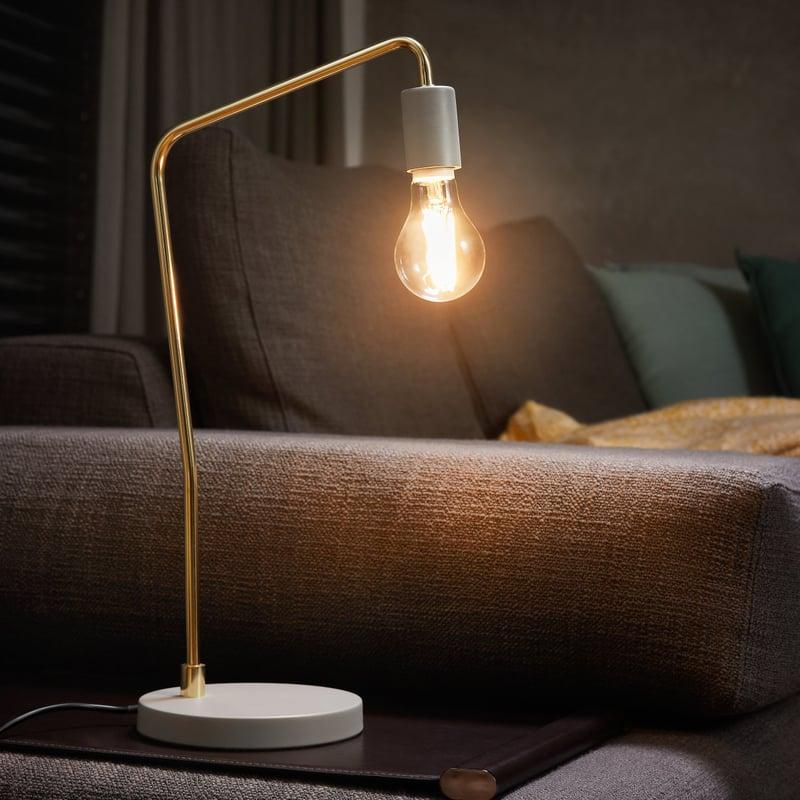
Bedroom lighting should accommodate a transition from activity to rest.
A strong, cool light may be useful when organising clothing or cleaning the room. However, many people prefer warmer and less intense illumination during the evening.
This is where dimmable LED bulbs and smart lighting become useful. A suitable bedroom lighting arrangement might include:
- A general ceiling light
- A bedside lamp
- A dimmable bulb for evening use
- A directional reading light
- A subtle decorative light, where appropriate
The benefit is not that a particular bulb guarantees better sleep or relaxation. Those claims would require specific scientific evidence and depend on factors such as exposure duration, brightness, spectrum, and individual circumstances.
The more defensible conclusion is simpler: adjustable lighting gives occupants greater control over the visual environment. That control can make a room more adaptable to different activities and preferences.
5. OSRAM SMART+: When Lighting Becomes Adaptable
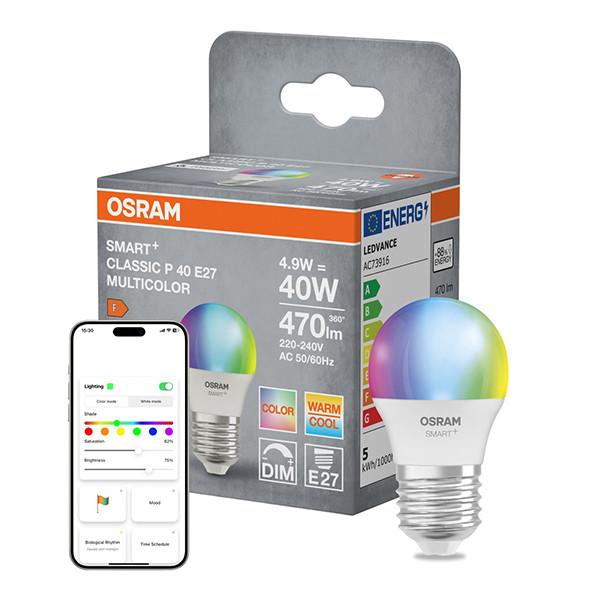
Traditional LED bulbs provide illumination. Smart LED bulbs add another layer: control.
The OSRAM SMART+ and LEDVANCE SMART+ ranges include products designed for different smart-home ecosystems and connection methods. Depending on the specific model, features may include:
- Dimming
- Adjustable white light
- Coloured light
- App control
- Voice control
- Smart-home integration
- Scheduling and routines
- Compatibility with selected platforms such as Matter, Wi-Fi, Bluetooth, or other supported systems
Compatibility must be checked for the exact product. A bulb marketed as smart does not necessarily work with every smart-home platform.
Why does this matter in everyday life?
Imagine a single room used as:
- A home office during the morning
- A dining area at lunchtime
- A relaxing living space in the evening
Instead of installing several different lamps for each activity, a compatible smart bulb may allow the user to modify brightness or colour according to the situation.
This does not eliminate the need for good fixture design or appropriate positioning. Smart control cannot compensate for an unsuitable lamp, excessive glare, or insufficient illumination.
But it can make an existing lighting arrangement more flexible.
Nomadisch perspective: The most useful technology is not necessarily the one with the greatest number of functions. It is the one that gives you meaningful control over your environment.
OSRAM SMART+ DOT-IT
Best suited for: Portable accent lighting and flexible decorative
applications.
Why consider it: Compact format and the advertised ability to control
colours and brightness through the SMART+ app.
Look for: Battery or power specifications, brightness, mounting method,
control requirements, and operating time.
6. The New Generation of DOT-IT: Small Design, Multiple Possibilities

One of the more interesting directions in contemporary lighting is the development of compact, portable, and flexible light sources.
The new generation of DOT-IT, presented by the OSRAM Homelighting Shop, introduces smart control and colour customisation into a small lighting format.
The product's promotional concept is straightforward:
TWIST IT. SHAKE IT.
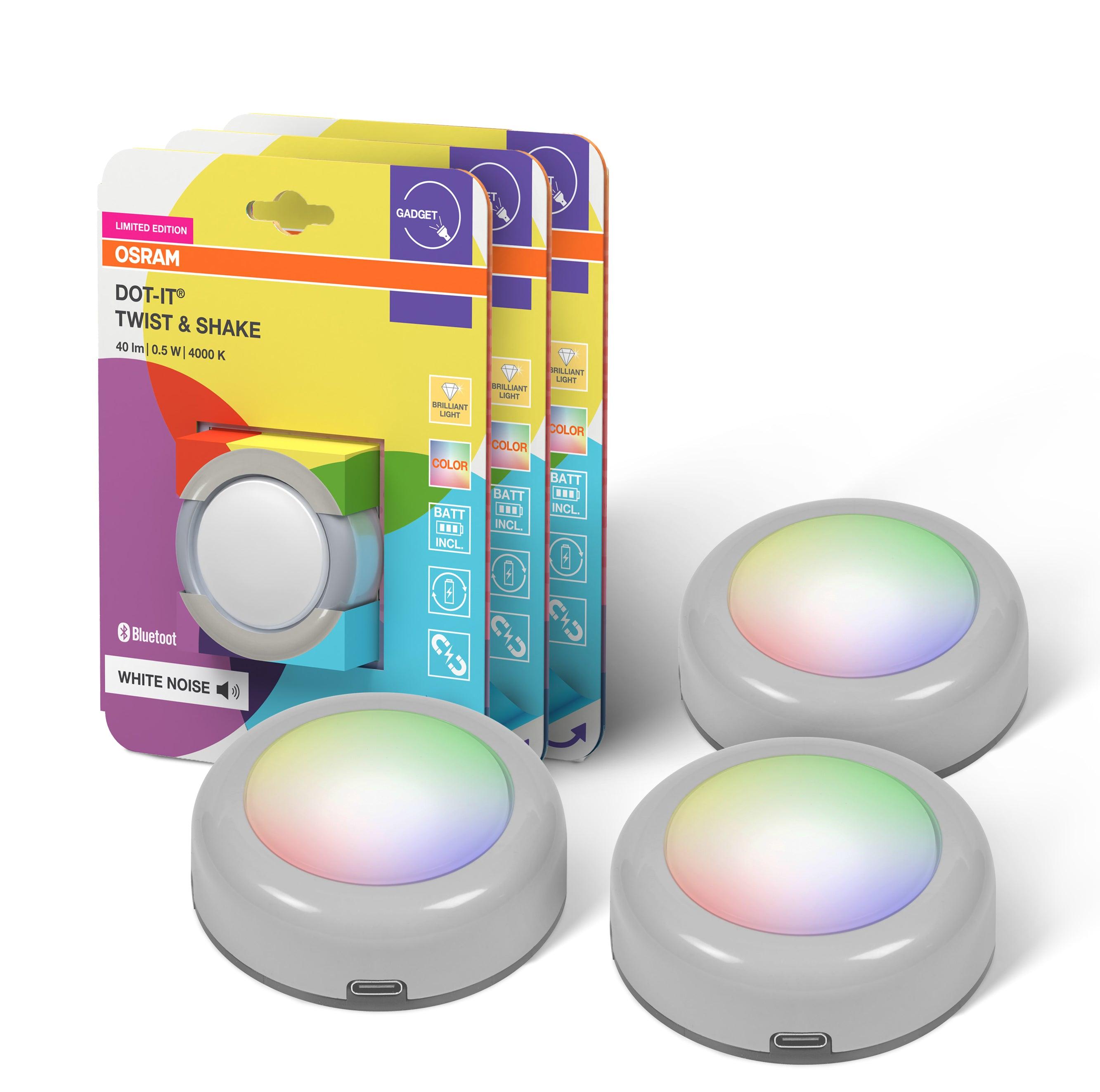
According to the product presentation, the SMART+ app allows users to control colours and brightness, with access to up to 16 million colour shades. This makes it possible to create different lighting atmospheres, from subdued ambient illumination to more colourful settings.
What makes this interesting?
The value of a compact light is not necessarily its raw brightness. It may be its flexibility.
A small, portable light can potentially be used:
- On a bedside table
- On a shelf
- In a reading corner
- As an accent light
- In a temporary workspace
- As a decorative element during social occasions
The design concept is particularly relevant to smaller European homes, where furniture and lighting often need to perform more than one function.
A critical technical observation
The presence of 16 million colour options does not mean that every colour will be equally useful. In practical terms, the most important functions may be:
- Reliable brightness adjustment
- A comfortable warm-white setting
- Appropriate colour rendering
- Convenient controls
- Battery life or power autonomy, if applicable
- Physical stability and ease of placement
RGB lighting is excellent for atmosphere and decorative effects, but it should not automatically be considered a substitute for a high-quality white-light source used for reading, cooking, or detailed work.
The DOT-IT concept is most compelling when viewed as an adaptable accent light — not as a universal replacement for every lamp in the home.
7. Kitchen Lighting: Function Comes Before Decoration
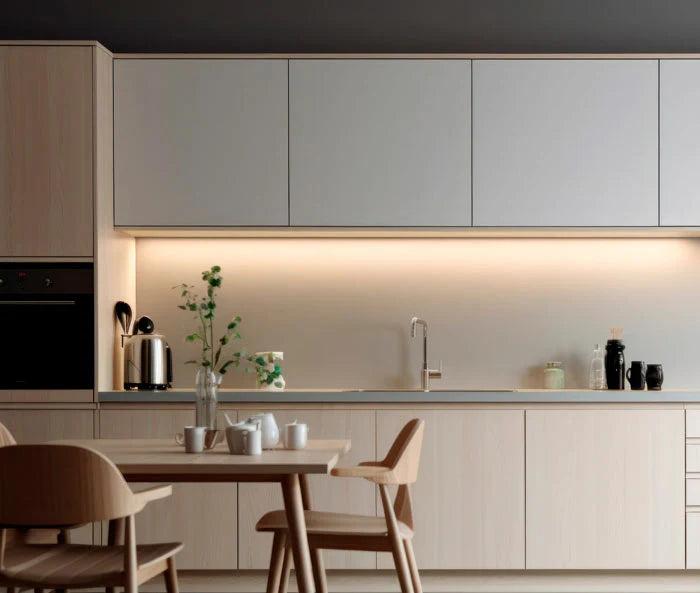
The kitchen is one of the clearest examples of how lighting affects functionality.
A beautiful kitchen can become inconvenient if the worktop is poorly illuminated. The person preparing food may create shadows with their own body, particularly when the main light source is positioned behind them.
This is why under-cabinet lighting, task lighting, and carefully positioned ceiling luminaires can be valuable.
The LEDVANCE Danish shop includes a dedicated category for kitchen LED lighting and lamps. When evaluating products for this space, consider:
- Light distribution across the worktop
- Glare when viewed from a standing position
- Colour rendering, especially when preparing food
- Ease of cleaning
- Installation requirements
- Cable management
- Moisture resistance where relevant
- Compatibility with existing electrical systems
Is brighter always better?
No.
A very bright light directed toward a glossy kitchen surface can create reflections and visual discomfort. The goal is not simply to maximise lumens. It is to provide useful, evenly distributed illumination where tasks actually take place.
A well-positioned kitchen light may improve the experience of cooking more effectively than a significantly brighter ceiling lamp.
LEDVANCE/OSRAM Kitchen Lighting
Best suited for: Worktops, under-cabinet illumination, and functional
kitchen lighting.
Why consider it: A focused approach to illuminating areas where tasks are
performed.
Look for: Light distribution, installation method, colour rendering, glare,
and moisture suitability.
8. New Designs, New Possibilities: Lighting as Interior Architecture
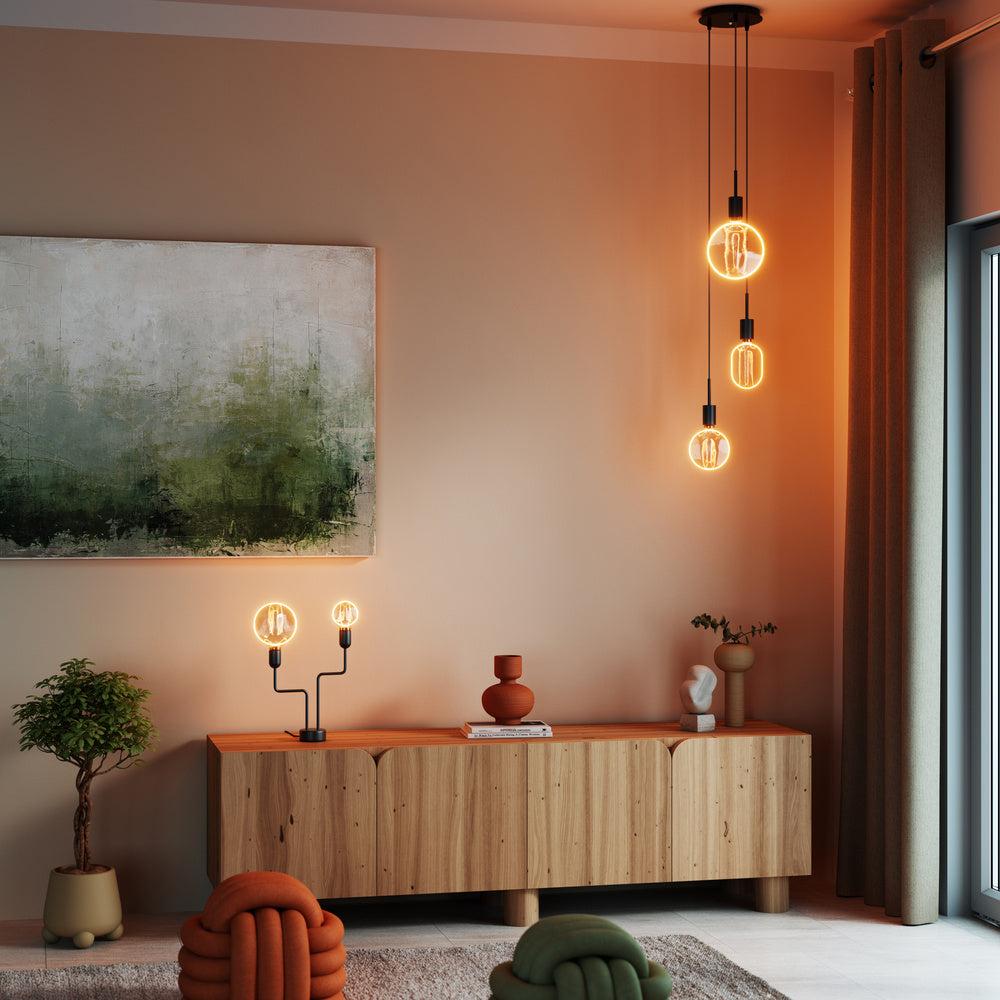
Lighting products are no longer limited to functional objects hidden inside fixtures. They can also become part of the visual identity of a room.
The LEDVANCE Homelighting Shop presents several design directions, including:
- Natural Harmony
- Fabulous Fabrics
- Vintage Edition 1906
- Glowing Simplicity
- Plaster Chic
- Classic Clay
- Simply Metal
- Other decorative collections
These categories suggest different approaches to material, shape, finish, and atmosphere.
For a minimalist interior, the choice of lamp should be considered alongside:
- The texture of the surrounding materials
- The colour of the walls
- The height of the ceiling
- The visual weight of furniture
- The amount of natural daylight
- The desired relationship between light and shadow
A decorative bulb with visible filaments, for example, may contribute to the character of an open pendant. A discreet, diffused lamp may be more appropriate where the goal is visual calm.
Neither approach is universally superior. The appropriate choice depends on the room and the intended experience.
9. Energy Efficiency: What Buyers Should Actually Compare
Energy efficiency is one of the strongest practical reasons to consider LED lighting.
However, consumers should avoid judging a lamp solely by its advertised wattage.
The correct comparison is between the amount of useful light produced and the electricity consumed.
A simple example
Suppose a household replaces a 60 W incandescent bulb with a 9 W LED bulb that produces a comparable amount of light. If the lamp is used for four hours per day:
Incandescent bulb: 60 W × 4 hours = 240 Wh per day
LED bulb: 9 W × 4 hours = 36 Wh per day
The theoretical daily electricity difference is: 204 Wh, or 0.204 kWh per day.
Over one year: 0.204 kWh × 365 = 74.46 kWh
The actual financial saving depends on the electricity tariff, usage pattern, product performance, and whether the two lamps provide comparable illumination. This example is illustrative rather than a guarantee of savings from any specific OSRAM model.
What about lifetime?
LED bulbs are generally designed for long operating lives, but the advertised lifetime should be interpreted carefully. A product's actual longevity can be affected by:
- Heat management
- Operating conditions
- Switching frequency
- Electrical compatibility
- Fixture design
- Ambient temperature
A bulb installed in a poorly ventilated enclosed fixture may experience different conditions from one installed in an open luminaire.
The best purchase is not necessarily the cheapest bulb. It is the one that offers an appropriate balance of price, efficiency, light quality, reliability, and expected use.
10. Is OSRAM Worth the Price?
This is where a technical review should become more demanding.
Brand recognition alone does not justify a premium. A meaningful evaluation should ask:
- Does the bulb provide the required amount of light?
- Is its colour rendering appropriate?
- Does it work with the intended dimmer?
- Is its smart-home compatibility suitable?
- Is the design appropriate for the fixture?
- Is the energy consumption competitive?
- Does the product provide useful features rather than unnecessary complexity?
- Is the price reasonable compared with comparable alternatives?
OSRAM and LEDVANCE offer products across different price points, from conventional LED bulbs to decorative and smart lighting solutions. That makes the range relevant to different types of buyers.
A basic E27 LED bulb may be the right choice for a hallway or utility room. A dimmable decorative bulb may make more sense in an exposed pendant. A SMART+ product may justify additional expenditure for someone who values automation, colour control, and integration with a smart-home system.
But a smart bulb may be unnecessary if the user simply needs reliable illumination from a standard lamp.
Technical verdict
OSRAM and LEDVANCE deserve consideration for their broad product range, established lighting expertise, and combination of conventional, decorative, and smart LED solutions.
The strongest value proposition is not that every product is automatically superior to every competitor. It is that the range allows consumers to choose a lighting solution according to the requirements of a specific room.
For intentional consumption, that distinction matters.
12. How to Choose the Right Light for Each Room
| Room | Useful lighting approach | What to prioritise |
|---|---|---|
| Living room | Layered lighting with ambient and accent sources | Warmth, dimming, glare control |
| Bedroom | Warm, adjustable illumination | Comfort, brightness control |
| Kitchen | General and task lighting | Worktop visibility, even distribution |
| Home office | Focused task lighting with suitable ambient light | Glare control, colour rendering |
| Hallway | Efficient general lighting | Reliability, appropriate brightness |
| Reading corner | Directional task lighting | Beam control, sufficient illumination |
| Decorative area | Accent or colour-changing lighting | Design, flexibility, atmosphere |
There is no universal lighting solution for every interior. The most effective approach is to consider the function of the room first and then select a suitable product.
13. Intentional Consumption: Buy Less, Choose Better
At Nomadisch, we are interested in the relationship between design and everyday life. That includes the objects we bring into our homes — and the reasons we choose them.
Lighting offers a particularly clear example of intentional consumption.
A household does not necessarily need more lamps. It may need:
- A better-positioned light
- A more efficient bulb
- A warmer colour temperature
- A dimmable source
- A task light in the right place
- A fixture that works with the existing interior
Replacing an unsuitable lamp with a carefully selected alternative may create a more meaningful improvement than purchasing several decorative products without a clear purpose.
This is the difference between collecting objects and improving an environment.
A good lighting purchase should answer a practical question: what problem will this light solve in my home?
If the answer is clear, the purchase becomes easier to evaluate.
14. Where to Explore OSRAM and LEDVANCE Lighting in Denmark
The official Danish OSRAM Homelighting Shop, operated by LEDVANCE, presents a range of lighting categories, including:
- LED bulbs
- SMART+ lighting
- Decorative lamps
- Indoor lighting
- Kitchen lighting
- E27 and E14 bulbs
- GU10 lighting
- Dimmable products
- Smart-home-compatible products
- New lighting designs and collections
Explore OSRAM & LEDVANCE Lighting in Denmark
Browse the official Danish OSRAM Homelighting Shop.
Visit the Official Shop →Product availability, prices, discounts, and compatibility should be verified at the time of purchase.
Final Technical Verdict: Is OSRAM Worth Considering?
OSRAM and LEDVANCE offer a substantial selection of LED lighting products for different domestic applications.
Their range includes straightforward energy-efficient bulbs, decorative lighting, kitchen solutions, and smart products designed to provide greater control over brightness and colour.
The practical strengths of the range are its variety, compatibility options, and ability to address different lighting requirements.
However, the right product depends on the room, the fixture, and the user's priorities.
For a consumer who needs a simple and efficient bulb, a conventional LED model may be sufficient. For someone interested in smart-home control, adaptable colour, or more flexible interior lighting, a SMART+ product may offer additional value.
The new generation of DOT-IT is particularly interesting as a compact, adaptable accent light, although its usefulness should be judged according to brightness, autonomy, controls, and intended application.
Our conclusion is straightforward: good lighting is not about maximum brightness or buying the most technologically advanced product. It is about choosing the right light for the way you live.
That is where OSRAM and LEDVANCE lighting can become a practical part of a more comfortable, functional, and intentional home.
Affiliate disclosure: This article contains affiliate links. If you purchase a product through one of our links, Nomadisch may receive a commission at no additional cost to you. See our Affiliate Disclosure for details.